The Renewal Illusion: Why Automated Certificates Still Expire in Production
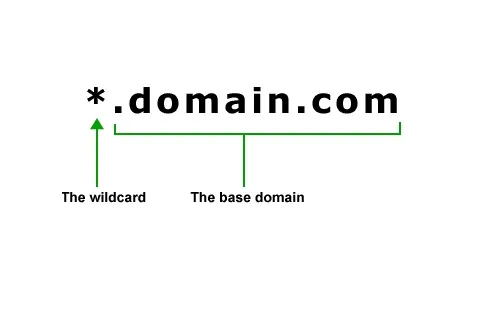
Photo: PeggyPesiri, CC BY-SA 3.0, via Wikimedia Commons
Automated certificate renewal is one of the most successful reliability improvements in modern infrastructure. It removed the manual calendar reminder, reduced human error, and made short-lived certificates practical. Yet the phrase auto-renew has acquired a dangerous implication: that expiry is solved. In production, certificates still expire because automation is not a single feature. It is a chain of dependencies, and any weak link can stop renewal without stopping the application. At S4Core, we treat certificate lifecycle automation as an operational system that needs its own observability, permissions review, and failure testing.
Automation Moves the Failure Point
When renewal was manual, the common failure was forgetting. When renewal is automated, the common failure is silent breakage. The certificate authority may be reachable, the agent may be running, and the dashboard may be green, but the renewal may still fail because the validation challenge cannot complete. This is especially common with HTTP-01 challenges behind load balancers, CDNs, or Web Application Firewalls that intercept the validation path. The automation reports a generic failure, the certificate remains valid for a few more weeks, and the incident is deferred rather than prevented.
DNS-01 challenges introduce a different dependency: the automation must be able to create and remove TXT records in the correct zone. If the API credentials are scoped too narrowly, or if the zone has changed providers, the challenge fails. If the credentials are scoped too broadly, the automation becomes a security liability. The operational task is not merely to enable renewal. It is to prove that the renewal path still works after every change to DNS, edge routing, or access control.
Rate Limits Are a Production Constraint
Certificate authorities impose rate limits for good reasons, but those limits interact badly with retry logic. A misconfigured agent that retries aggressively can exhaust its allowance and then be unable to renew a production certificate when the real need arrives. Staging environments that share credentials with production can make the problem worse. So can duplicate automation running on multiple hosts, each believing it owns the renewal.
Teams should treat rate limits as a capacity boundary and design renewal behavior accordingly. That means jittered retries, clear ownership of the renewal task, and separate credentials or accounts for staging and production. It also means monitoring the rate-limit response, not only the final certificate status. A renewal system that reports success until it reports nothing at all is not observable.
Permissions Drift Breaks the Chain
Automated renewal depends on credentials that can modify DNS records, write to web roots, or interact with a load balancer. These permissions are often granted during initial setup and then forgotten. When an IAM policy is tightened, a service account is rotated, or a role is restructured, renewal can fail quietly. The application continues to serve traffic, so nobody notices until the certificate approaches expiry.
The remedy is to include renewal credentials in the same lifecycle management as other production secrets. Document who owns them, what they can change, and how they are rotated. Test renewal after permission changes. A certificate renewal path that has never been tested after an IAM update is an assumption, not a control.
Monitoring Blind Spots
Many teams monitor certificate expiry and consider the job done. Expiry monitoring is necessary, but it is a lagging indicator. By the time a certificate is 14 days from expiry, the automation has already failed. A better monitoring model tracks the renewal attempt itself: when it ran, which challenge type it used, whether the challenge completed, whether the certificate was issued, and whether the new certificate was deployed to every endpoint. The last point is often missed. A certificate may renew successfully at the account level but fail to propagate to an older load balancer, an internal service, or a secondary region.
Inventory is the foundation. If the organization does not know every endpoint that terminates TLS, it cannot verify that renewal reached them all. That includes internal service meshes, mail gateways, VPN concentrators, and third-party integrations that pin certificates. The audit trail should connect certificate serial numbers to deployment targets, not only to domains.
A Checklist for Closing the Gap
- Inventory every TLS endpoint, including internal and non-HTTP services.
- Identify the challenge type for each certificate and the dependencies it requires.
- Separate staging and production credentials and verify rate-limit behavior.
- Monitor renewal attempts, challenge failures, issuance, and deployment as distinct events.
- Alert on renewal failure early enough to allow manual intervention.
- Test renewal after DNS changes, WAF changes, IAM changes, and load balancer replacements.
- Document certificate ownership and escalation paths.
- Review permissions for least privilege without breaking the renewal path.
Auto-Renew Is Not a Guarantee
The organizations that avoid certificate outages are not the ones with the most automation. They are the ones that assume automation can fail and build detection around it. A certificate is a production dependency with an expiry date, and expiry is not a date on a calendar. It is the moment when every hidden failure in the renewal chain becomes visible at once. The operational goal is to make those failures visible long before that moment.