Orchestration Overhead: The True Cost of Running Kubernetes at the Edge
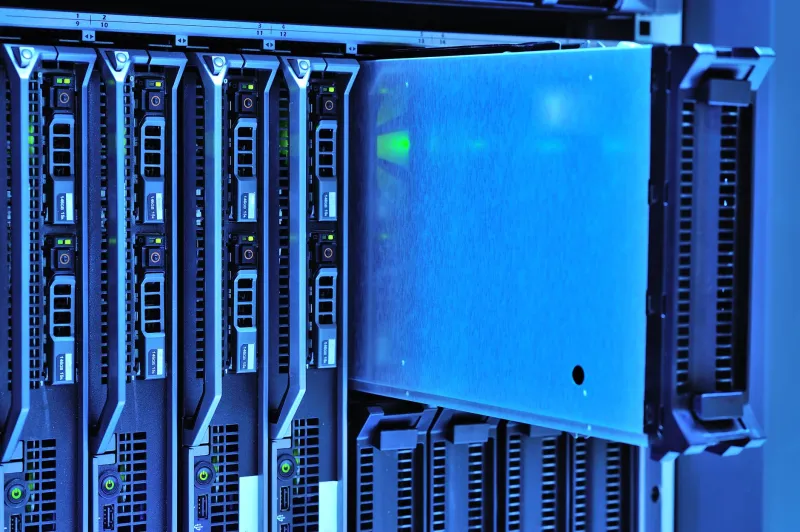
Kubernetes has earned its reputation as the backbone of modern cloud-native infrastructure. Inside a well-staffed, centralized data center, it delivers on most of its promises: declarative configuration, self-healing workloads, and a rich ecosystem of tooling. But as organizations push compute resources closer to the edge—into regional facilities, retail locations, manufacturing floors, and telecommunications infrastructure—the economics of running Kubernetes shift in ways that rarely surface during the architecture review.
The result is a pattern that infrastructure teams across the United States are beginning to recognize: distributed environments that cost two to three times more to operate than projected, with a significant portion of that excess attributable not to the workloads themselves, but to the orchestration layer sitting beneath them.
Where the Costs Actually Accumulate
The most visible line item is licensing. Enterprise Kubernetes distributions—particularly those bundled with support contracts, security scanning, and policy management tooling—carry per-node pricing that scales poorly when applied to dozens or hundreds of lightweight edge sites. A single-node deployment at a remote facility may run workloads consuming minimal compute, yet still incur the same licensing overhead as a full production cluster. Multiply that across a geographically distributed footprint and the numbers become difficult to justify.
Less visible, but equally significant, is the management surface area that Kubernetes introduces at scale. Each cluster requires certificate rotation, etcd maintenance, control plane upgrades, and network plugin management. At the edge, where connectivity is intermittent and local technical staff may be limited or nonexistent, these tasks fall to centralized platform teams operating across time zones and unreliable links. The operational hours consumed by routine cluster hygiene—particularly during version upgrade cycles—represent a substantial hidden labor cost that rarely appears in infrastructure budgets as a discrete line item.
Then there is the tooling sprawl that Kubernetes almost inevitably attracts. Ingress controllers, service meshes, secrets management systems, GitOps agents, observability collectors: each layer adds memory overhead, CPU consumption, and another component requiring maintenance. On a full-size cloud instance, these additions are negligible. On an edge node running on constrained hardware, they can consume thirty to forty percent of available resources before a single application workload is scheduled.
The Skill Gap Premium
Kubernetes expertise commands a significant salary premium in the US labor market. According to recent compensation surveys, platform engineers with Kubernetes specialization earn meaningfully more than generalist infrastructure professionals. For organizations maintaining distributed edge infrastructure, this creates a compounding cost: not only must they recruit and retain this talent, but they must also account for the institutional risk that comes with concentrating critical operational knowledge in a small number of individuals.
Edge environments introduce failure modes that differ substantially from centralized cloud deployments. Split-brain scenarios, node isolation during WAN outages, and hardware-level failures at unstaffed sites all require operators who understand both the Kubernetes control plane and the physical constraints of the underlying environment. That intersection of skills is narrow, and the market prices it accordingly.
What Over-Orchestration Actually Looks Like
Not every edge workload requires the full capability surface of Kubernetes. A significant portion of edge deployments consist of a small number of containerized services—often fewer than ten—running on a single node or a two-node high-availability pair. These workloads do not require pod autoscaling, multi-tenant namespace isolation, or custom resource definitions. They require reliable execution, restart-on-failure behavior, and a straightforward mechanism for pushing updated container images.
Applying Kubernetes to these scenarios is not an architectural decision; it is an organizational default. Teams standardize on a single orchestration platform to reduce cognitive overhead, and that standardization makes sense at the center of the infrastructure. At the edge, it imports complexity that the workloads themselves do not demand.
Leaner Alternatives Worth Evaluating
Several mature alternatives address edge orchestration requirements without the full weight of Kubernetes. K3s, developed by Rancher Labs, was explicitly designed for resource-constrained environments and eliminates several Kubernetes components that add overhead without contributing to edge-specific reliability. It retains compatibility with standard Kubernetes manifests, which reduces the migration burden for teams already invested in that ecosystem.
For environments where even K3s introduces unnecessary abstraction, container runtimes paired with lightweight process supervisors offer a viable path. Podman with systemd integration, for example, provides container execution, automatic restart behavior, and image management without a control plane. The operational model is simpler, the resource footprint is smaller, and the failure modes are more predictable for teams without deep Kubernetes expertise.
Fleet management platforms designed for edge environments—including those offered by established infrastructure vendors—can provide centralized configuration, update orchestration, and health monitoring across large numbers of lightweight nodes without requiring each site to run a full Kubernetes stack.
Making the Case for a Cost Audit
Organizations that have already deployed Kubernetes broadly at the edge are not necessarily in a position to immediately re-architect their infrastructure. Migration carries its own costs and risks. But a structured cost audit—one that quantifies licensing, labor, tooling overhead, and hardware utilization across the edge footprint—often surfaces data that changes the calculus for future deployments and expansion.
The audit should address three questions: What percentage of deployed Kubernetes capability is actually utilized at each edge site? What is the fully loaded cost per node, including labor and licensing? And what is the cost of a failure event at an edge site, factoring in the complexity of remote remediation?
The answers are rarely flattering. But they are necessary. Edge infrastructure is expanding faster than the platforms designed to manage it were built to accommodate, and the organizations that recognize the orchestration overhead problem early will maintain a meaningful operational and financial advantage over those that continue treating the edge as simply a smaller version of the data center.
At S4Core, the core principle has always been that infrastructure decisions should be driven by operational reality, not platform momentum. At the edge, that distinction has never mattered more.