A Green Backup Dashboard Proves Nothing Without a Restore Record
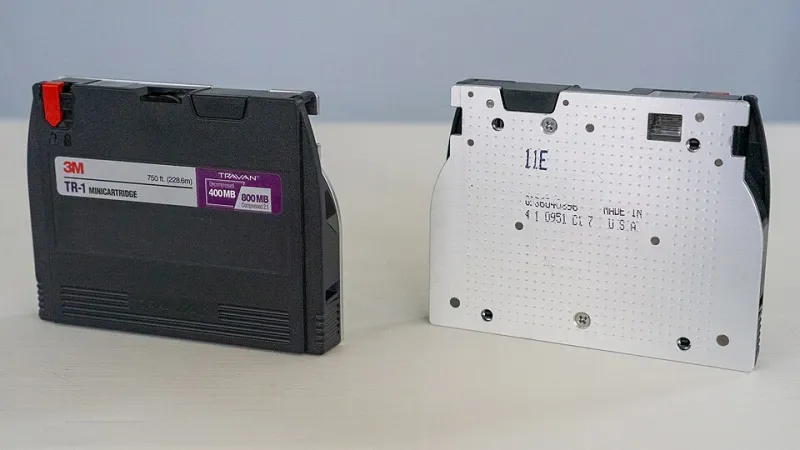
Photo: mrd489, CC BY-SA 4.0, via Wikimedia Commons
Backup systems are among the few pieces of infrastructure that generate a daily, unambiguous, universally trusted success signal. The job ran. The bytes moved. The dashboard is green. Very few teams apply the same scrutiny to the only question that matters: when we needed the data back, did it come back, and how long did it take?
The metric that lies politely
A successful backup job proves that data left one place and arrived at another. It says nothing about whether that data can be reconstituted into a working system. The gap between those two statements is not a rounding error — it is the entire difference between a disaster recovery plan and a disaster recovery capability.
Most organizations discover the gap during an incident. A storage tier fails, a ransomware event forces a rebuild, a migration corrupts a primary database, and suddenly the team is reading its own runbook for the first time while executives ask for a restoration time. The runbook was written by someone who has since changed roles. It references a key management service that has been reorganized. It assumes a service principal that no longer has the permissions it describes.
Where restore paths actually break
The failures are rarely dramatic and almost never related to the backup software itself. They cluster in a few predictable places.
Missing credentials. Encryption keys, KMS grants, storage account tokens, and the service identities required to read the backup repository are frequently held by people rather than systems. When those people move on, the encrypted backups remain perfectly intact and completely unreadable.
Undocumented dependencies. A database restore is not a database restore. It is a database, a schema version, a secrets store, a DNS record, an IAM policy, a certificate chain, a message queue with in-flight state, and a licensing server that must answer before the application will start. Anything absent from the diagram is absent from the recovery.
Integrity assumptions. Row counts match, therefore the data is good — that reasoning collapses the moment an application performs a logical operation across two systems that were restored to different points in time. Relative consistency between interdependent datasets is a distinct requirement that most backup tooling does not measure.
Silent scope drift. Backups protect what was configured when the job was created. New services, new databases, and new regions inherit protection only if someone adds them. The dashboard stays green because it is reporting on a shrinking fraction of the estate.
RPO is a claim; recovery is evidence
Recovery point objective and recovery time objective are planning figures. They describe what the organization has decided to tolerate, not what it can achieve. Between the two, RTO is the more dangerous, because it is the one leadership quotes in meetings and the one nobody has measured.
The only credible source for an RTO figure is a timed restore of a representative system, performed by the people who would actually do it, using the documentation they would actually have. Anything else is an estimate dressed as a commitment.
Designing a drill with pass or fail criteria
A restore test without pass criteria becomes a demonstration. It is performed, it mostly works, everyone is satisfied, and no capability improves. The drill needs to be scored.
Define, before the exercise begins: the target system, the point in time to restore to, the maximum acceptable elapsed time, the verification steps that constitute a successful restoration, and the individuals empowered to declare failure. Then run it end to end, from an empty environment, with the same access controls that would apply during a real incident.
A defensible verification set typically includes: application-level smoke tests against the restored system, referential integrity checks across dependent datasets, confirmation that secrets and certificates resolve, a comparison of record counts and checksums against expected ranges, and a documented restoration time recorded to the minute. Each item passes or fails; a partial pass is a fail, because partial recovery is what produces ambiguous decisions at two in the morning.
Cadence, ownership, and the record
Quarterly is a reasonable default for tier-one systems, annually for the long tail, and after every material architecture change regardless of calendar. What matters more than frequency is continuity: the same drills, the same criteria, the same recording, so that results are comparable over time.
Ownership should sit with a named team rather than a committee. The results should be published, including the failures, because a restore drill that never fails is not a drill — it is a rehearsal of a script everyone already knows. And the findings should feed back into the runbook within days, not at the next documentation cycle.
The record itself is the deliverable. Six months of dated restore evidence, with measured times and verification results, is worth more than any recovery plan document ever written. It is also the only artifact that will hold up when someone asks, in the middle of an incident, how long this is going to take.